
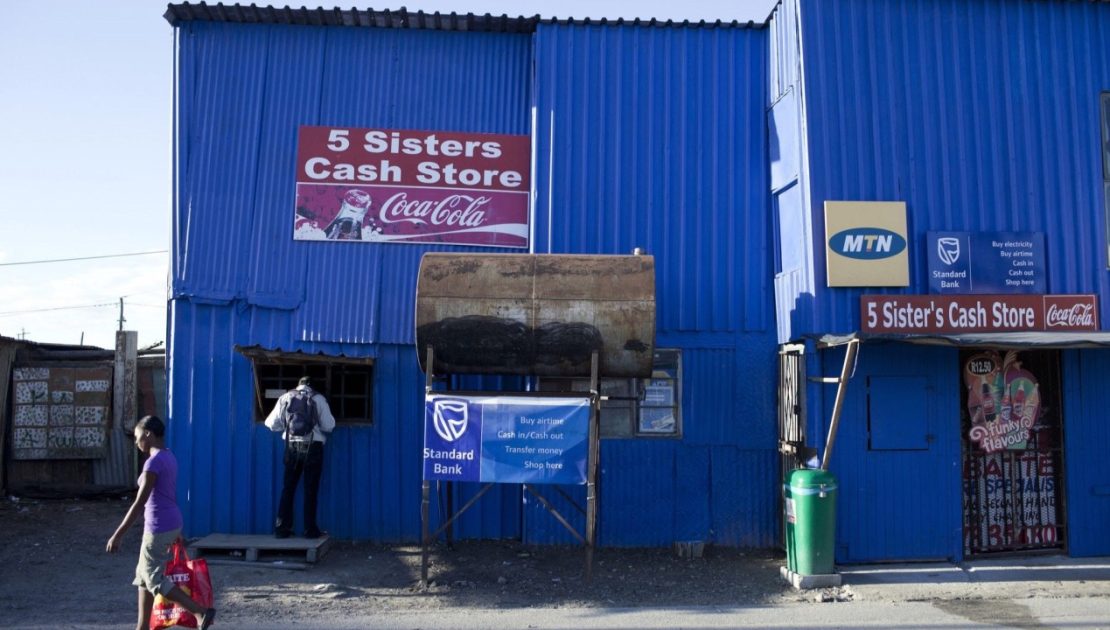
South Africa’s economy is currently stuck in a low-growth trap, hovering around 1.0% to 1.5% annual real GDP growth.
Yet, based on the country’s existing balance sheet, deep capital markets, and resource endowment, South Africa’s structural baseline growth should sit comfortably between 5.0% and 5.5%.
To understand why we are underperforming, we have to look at the five structural pillars that form South Africa’s primary economic foundation:
Aligning these five pillars gets South Africa back to a baseline 5.0%–5.5% GDP growth rate.
However, there is a 6th economic engine, one capable of pushing South Africa beyond a 5% recovery into a high-velocity 7%+ economic expansion.
That engine is the active commercial integration of our informal township economy through bi-directional commercial partnership along with skills transfer.
The single most important shift happening in South African strategy today is this: The informal market is no longer a “development” story. It is a core commercial growth market.
Standard Bank and multiple market experts estimate the township informal economy at roughly R900 billion to R1 trillion annually, with over 80% of businesses operating informally.
This market has three primary categories:
Major JSE corporates are putting serious balance-sheet capital into this entire space across distinct levels:
While corporate giants target consumer retail and fintech, mid-market formal executives miss the bigger picture: the township ecosystem is a complete, multi-sector B2B economy.
It is not just spaza shops. It encompasses amongst others:
The greatest commercial joint ventures are built on mutual, cross-pollinating skills transfer.
When a formal small and middle-market business (R10m–R500m revenue) partners with an informal operator, the ultimatequid pro quois not just commercial, but knowledge exchange.
The formal business brings corporate governance, technical standards, balance-sheet leverage, and capital structures.
In return, the township enterprise provides access to a potential market, an irreplaceable masterclass in localized micro-logistics, agile operating models, community-anchored trust, and high-velocity cash management.
A small or mid-tier formal manufacturer, distributor, or service firm does not need to build expensive new branch networks.
By partnering directly with township fabricators, contractors, suppliers, and logistics operators through guided, two-way mentorship, formal firms gain instant, low-cost last-mile distribution, localized assembly capabilities, and a trusted community footprint.
When formal balance sheets and technical standards link directly with the speed, localized intelligence, and agility of township enterprises, it converts survivalist operations into bankable small & mid-tier businesses, adding an additional 1.5% to 2.5% in real national GDP growth on top of the 5.0% structural baseline.
The macro math is clear. The primary 5 drivers get us to 5% GDP; the 6th engine takes us to 7%. The capital is moving, and the R1-trillion market is proven.
Yet, most executive teams lack thenon-traditional structuring frameworks, risk-translation models, and educational guidelines required to execute these JVs without accidentally crushing their local partners under corporate bureaucracy.
True partnership requires educating the business owner, partnership or board as much as training the informal operator. What is missing is the operational bridge that guides both parties through this two-way learning loop.
I pose this question to our business community:
As listed corporates and property funds race to own township retail and infrastructure, are mid-market executive teams simply lacking the guidance to structure these educational, two-way commercial joint ventures, or are we still failing to see the township entrepreneur as our most valuable teacher?
Let me know your thoughts in the comments but for guidance on how to partner, DM me or go tohttps://fiverc.com/management-consulting/beyond-horizons/
